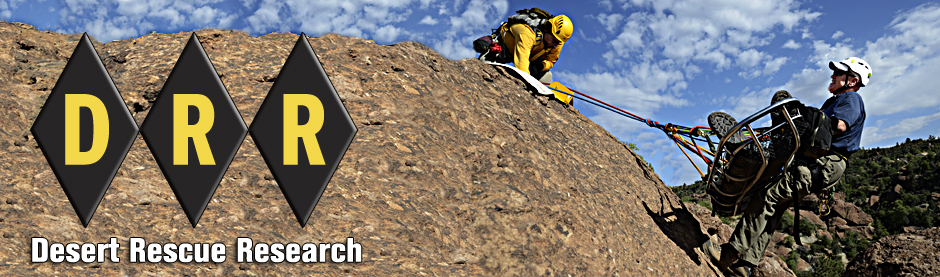
Save Lives with Rope Rescue Training
Hiking, rock climbing, exploring, backpacking and off-road adventure are some of America’s favorite activities. The same fun activities sometimes end in tragedy and in rugged remote locations that require Rope rescue. Rope rescue was performed by good Samaritans who had little training and less equipment in days gone by but today Rope rescue is performed by tough well-equipped professionals.
Your Rope rescue training program has a new tool and that is The Essential Technical Rescue Field Operations Guide. Rope rescue training is becoming more standardized every day and the rope rescue training procedures illustrated in fine detail in this guide will greatly assist the rope rescue practitioner in training and in rescue operations. For example high angle rescue is an essential part of rope rescue training and the rope rescue section contains over 80 pages of detailed step-by-step illustrations for Rope rescue training.
High angle offsets are gaining popularity in rope rescue training and the essential technical rescue field operations guide includes a number of detailed illustrations on high angle offsets. A tracking line is probably one of the most useful tools to skirt over obstacles on high angle rope rescue.
Of course, no Rope rescue training text would be complete without high lines. The new section on high lines reviews critical points for tensioning track lines, nomenclature of system components and operation of the carriage. Important distinction is the use of taglines that also function as a belay in the event of track line failure. This is an essential safety concept in rope rescue high line operations.
You will find our guide to be the most useful and detailed procedure guide for Rope rescue training and high angle rescue.
